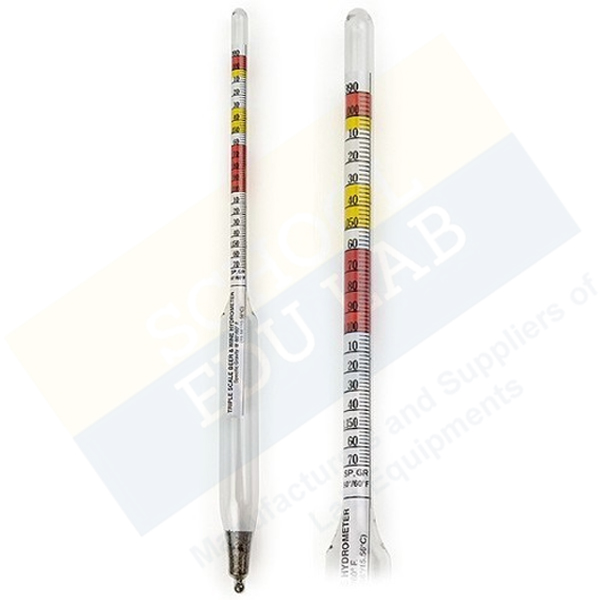
Quick Answer: A hydrometer measures the relative density of liquids such as oil; the glass instrument floats in the sample, and the point where the liquid surface meets its stem indicates the specific gravity.
Last updated: October 2026
Key Features
Measures relative density (specific gravity) of liquids
Glass construction with a cylindrical stem and bulb
Reading taken where the liquid surface touches the stem
For liquids such as oil
About This Product
Relative density compares the density of a liquid with that of water, and a hydrometer reads it directly from its stem. Students let the instrument float in the sample and note the value at the point where the liquid surface touches the stem, which makes it a simple instrument for density work in school and college labs. Schools and distributors in Brazil, Qatar, Barbados, New Zealand, Suriname and the Solomon Islands can order the Hydrometer from School Educational Instrument.
Frequently Asked Questions
How is a hydrometer reading taken?
The liquid surface touches the stem of the hydrometer at a specific point, and that point indicates the specific gravity of the fluid.