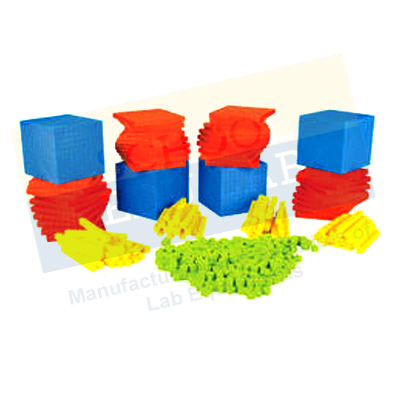
Quick Answer: Base Ten Blocks model place value with units, rods (longs), flats and a 10 x 10 x 10 cm cube, giving children a hands-on way into the base-ten idea behind the decimal number system.
Last updated: October 2026
Key Features
Units, rods (longs), flats and a cube
Cube measures 10 x 10 x 10 cm
Models the base-ten structure of the decimal number system
Supports place value work
Used for addition, subtraction, multiplication and division
Also covers mensuration and decimals
About This Product
Place value becomes concrete when ten units line up against a rod, ten rods against a flat and ten flats stack into the cube. Pupils exchange pieces as they add, subtract, multiply and divide, so carrying and borrowing make physical sense rather than being a rule to memorise. The same set later helps with decimals, when the cube is treated as one whole, and with area and volume in mensuration. School Educational Instrument can supply the Base Ten Block to schools and colleges in Saint Vincent and the Grenadines, Uruguay, Botswana, the Bahamas and Panama.
Frequently Asked Questions
Which pieces are in a base ten set?
Units, rods (also called longs), flats and a 10 x 10 x 10 cm cube.
Which topics can base ten blocks teach?
Place value, addition, subtraction, multiplication and division, as well as decimals and mensuration.